For my bachelor thesis, I designed and prototyped a serious-game application focused on the Luxembourgish secondary school education. The project is informed by a 2023 study (Kerger et al.) that examined Luxembourgish secondary school textbooks for inclusivity and representation, revealing a significant lack of diversity across most subjects, despite Luxembourg’s highly multicultural population, with over 47% of residents having a migration background (STATEC, 2023).
The project focuses on expanding digital learning tools that reflect students’ real-life experiences, ensuring inclusivity and representation of a diverse student body and supporting intrinsic motivation through immersive storytelling
As a Luxembourger, trained educator, and former secondary-school teacher, this topic is deeply meaningful to me. I see strong potential in serious games as adaptable and impactful additions to existing learning environments. Digital tools not only meet students in their everyday reality but also offer opportunities for differentiation and meaningful learning beyond the classroom.
As a Luxembourger, trained educator, and former secondary-school teacher, this topic is deeply meaningful to me. I see strong potential in serious games as adaptable and impactful additions to existing learning environments. Digital tools not only meet students in their everyday reality but also offer opportunities for differentiation and meaningful learning beyond the classroom.
TIME Mai - August 2024
TOOLS Unity, PS, Procreate, Maya; Inkle
TEAM Laurence Gilbertz
TASKS Game Design, 2D Art,
3D, Environment Design, Level Design,
VFX, Narrative, Coding,
Project Management.
TASKS Game Design, 2D Art,
3D, Environment Design, Level Design,
VFX, Narrative, Coding,
Project Management.
COACHES Prof. Susanne Brandhorst
Prof. Thomas Bremer
Prof. Thomas Bremer
CONTEXT HTW Berlin Game Design
Bachelor Thesis
CHARACTER DESIGN
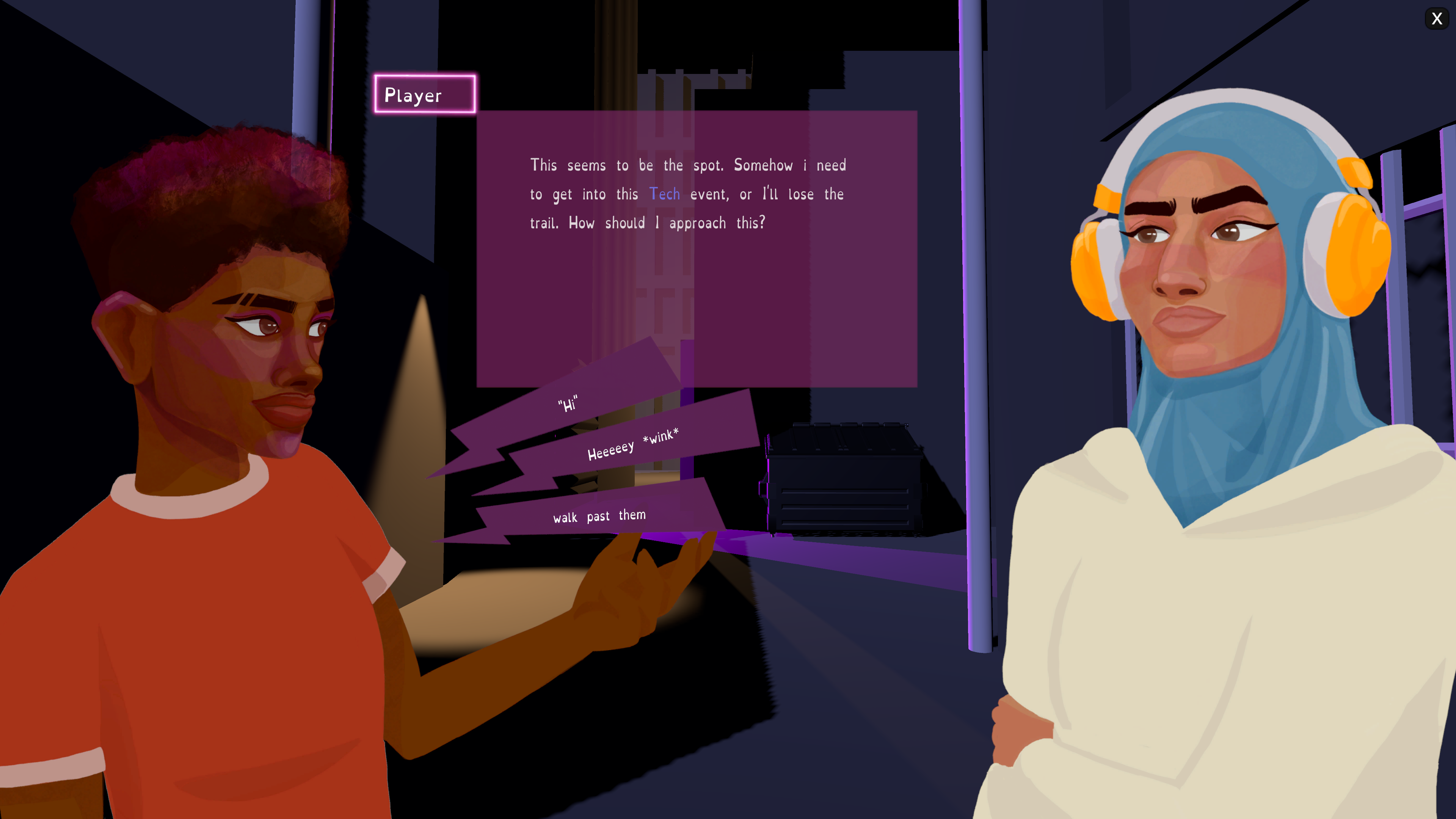
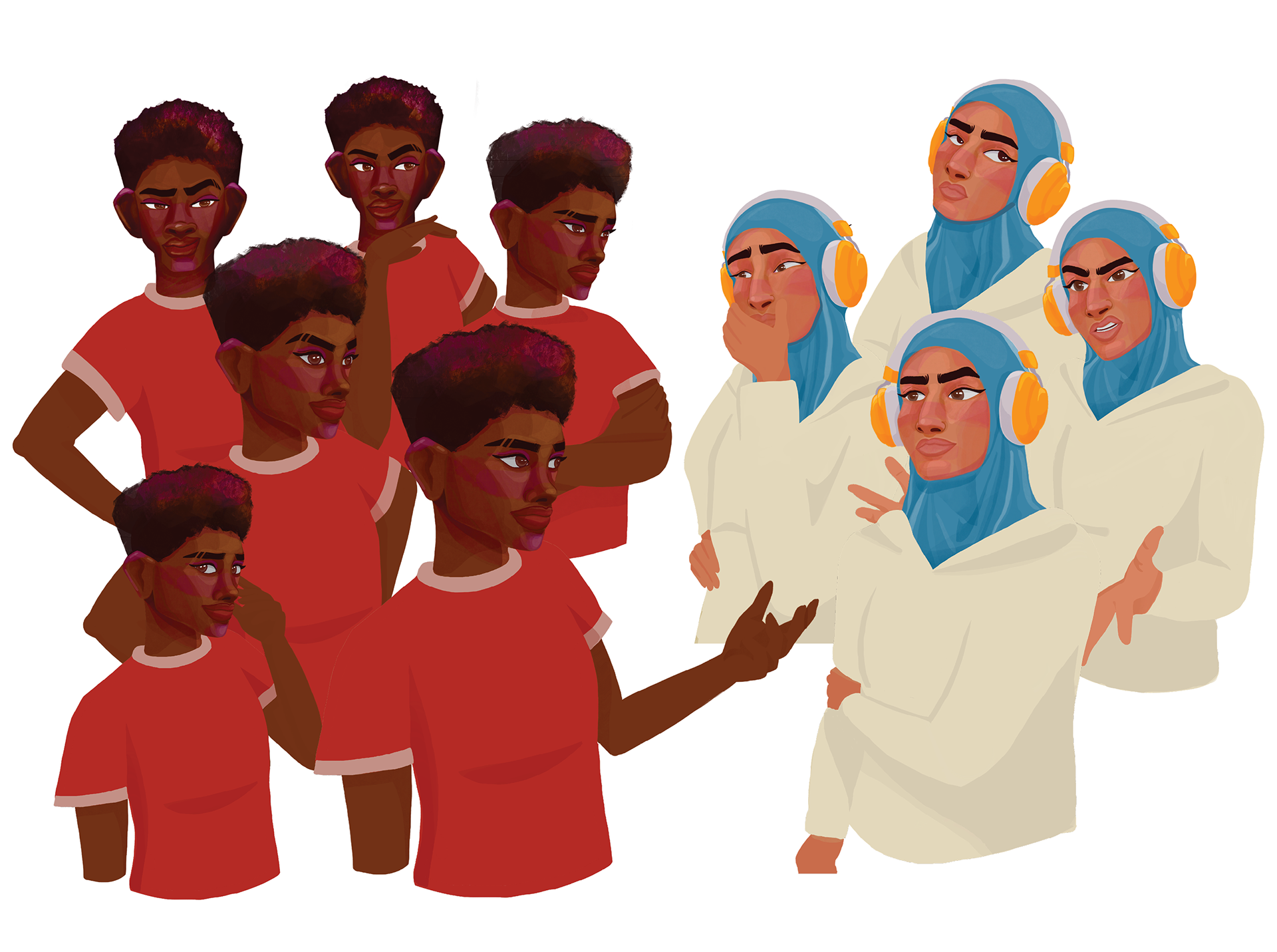
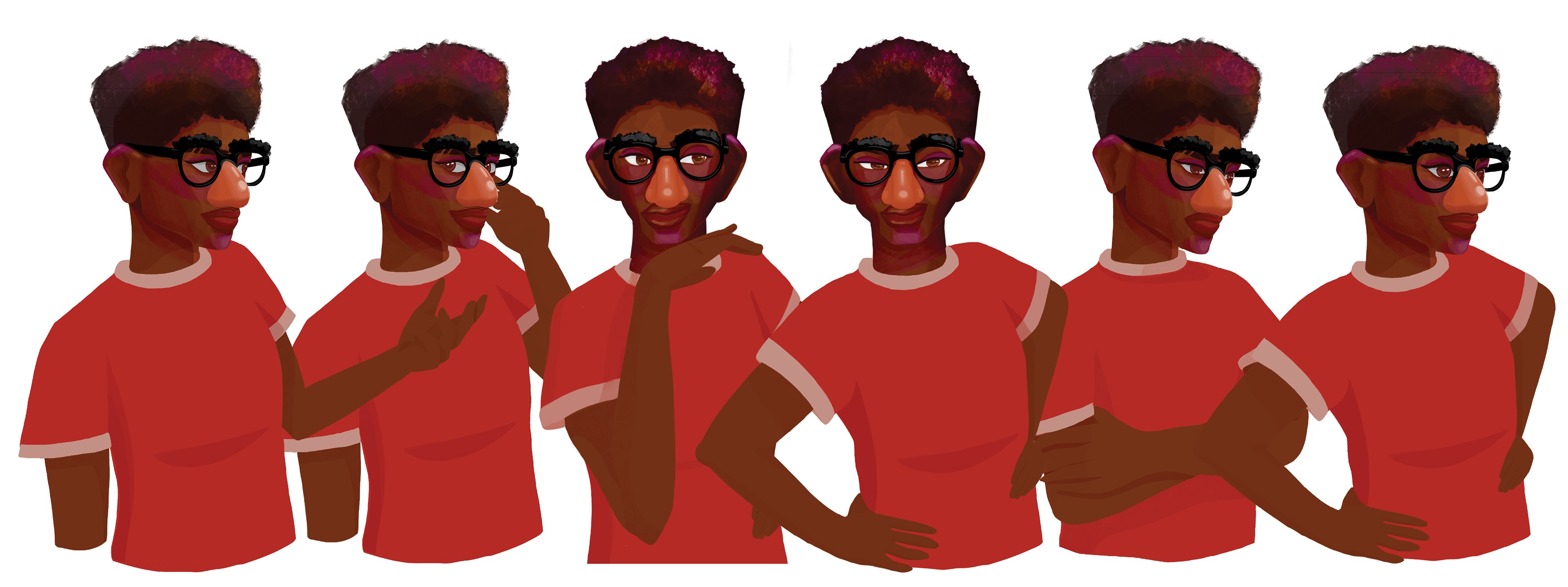
The scene features two characters: the player character and the bouncer to an exclusive tech event. The player character is intentionally gender-ambiguous, allowing players of any gender identity to identify with them. Their ethnic background is also deliberately undefined to enable broad interpretation. I chose to depict a non-white character to ensure representation and to allow for themes relevant to the everyday experiences of people of color.
The player character wears a simple, brightly colored T-shirt that stands out against any background. I avoided accessories to prevent unintentional associations with a specific subculture or gender identity.
The NPC is a woman wearing a hijab. This choice challenges the common cliché of the white, cis-male, tech-savvy gatekeeper often seen at tech start-up events. It also avoids portraying a white person blocking the path of a non-white character. Instead, two people meet at eye level and talk about something unrelated to their origins, a nuance often missing in school textbooks, where POC were frequently defined only through their “other” culture (Kerger et al., 2023).
The NPC wears a casual hoodie and headphones alongside a sporty hijab, presenting her as a modern, athletic, tech-interested Muslim woman.
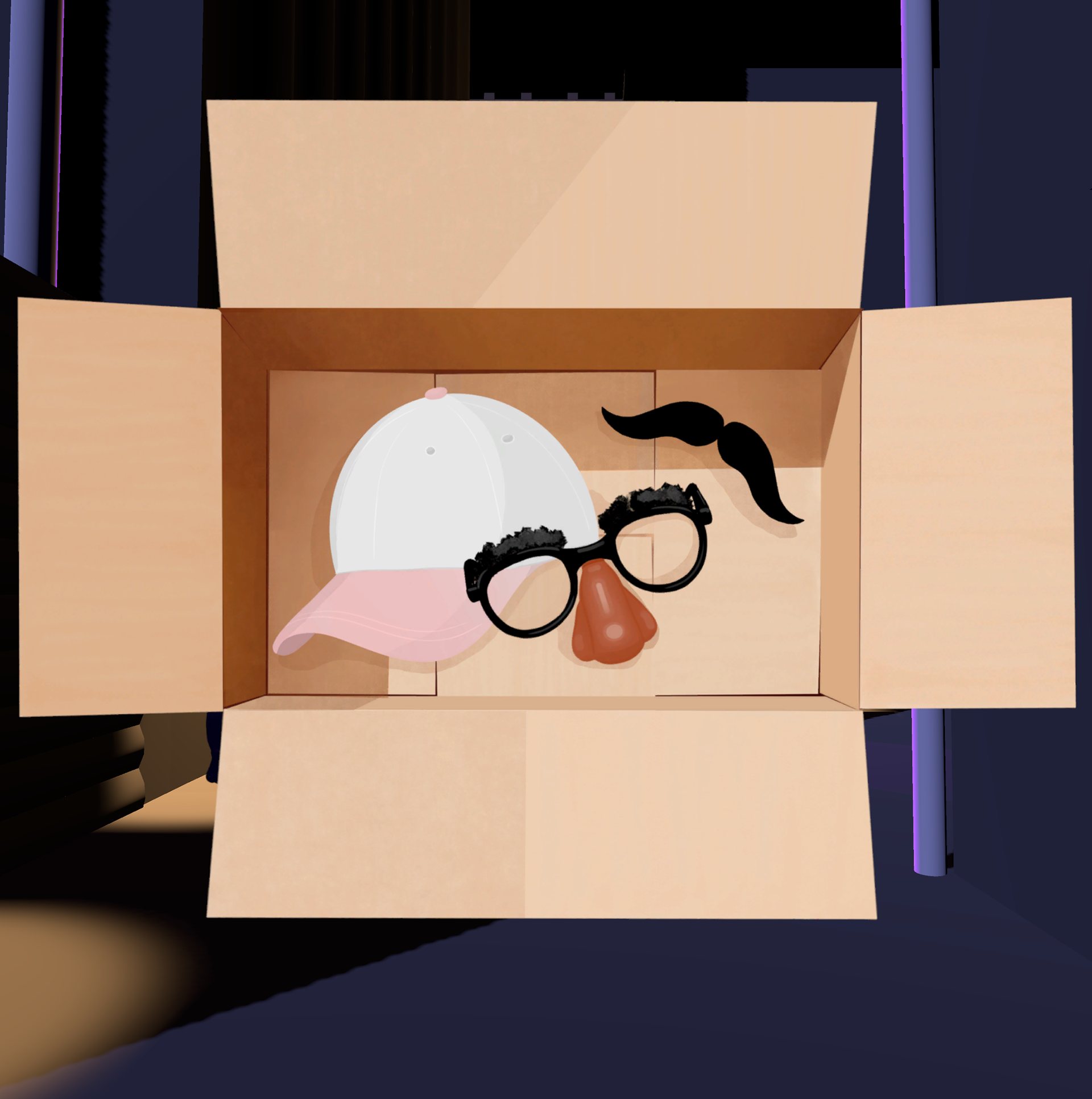
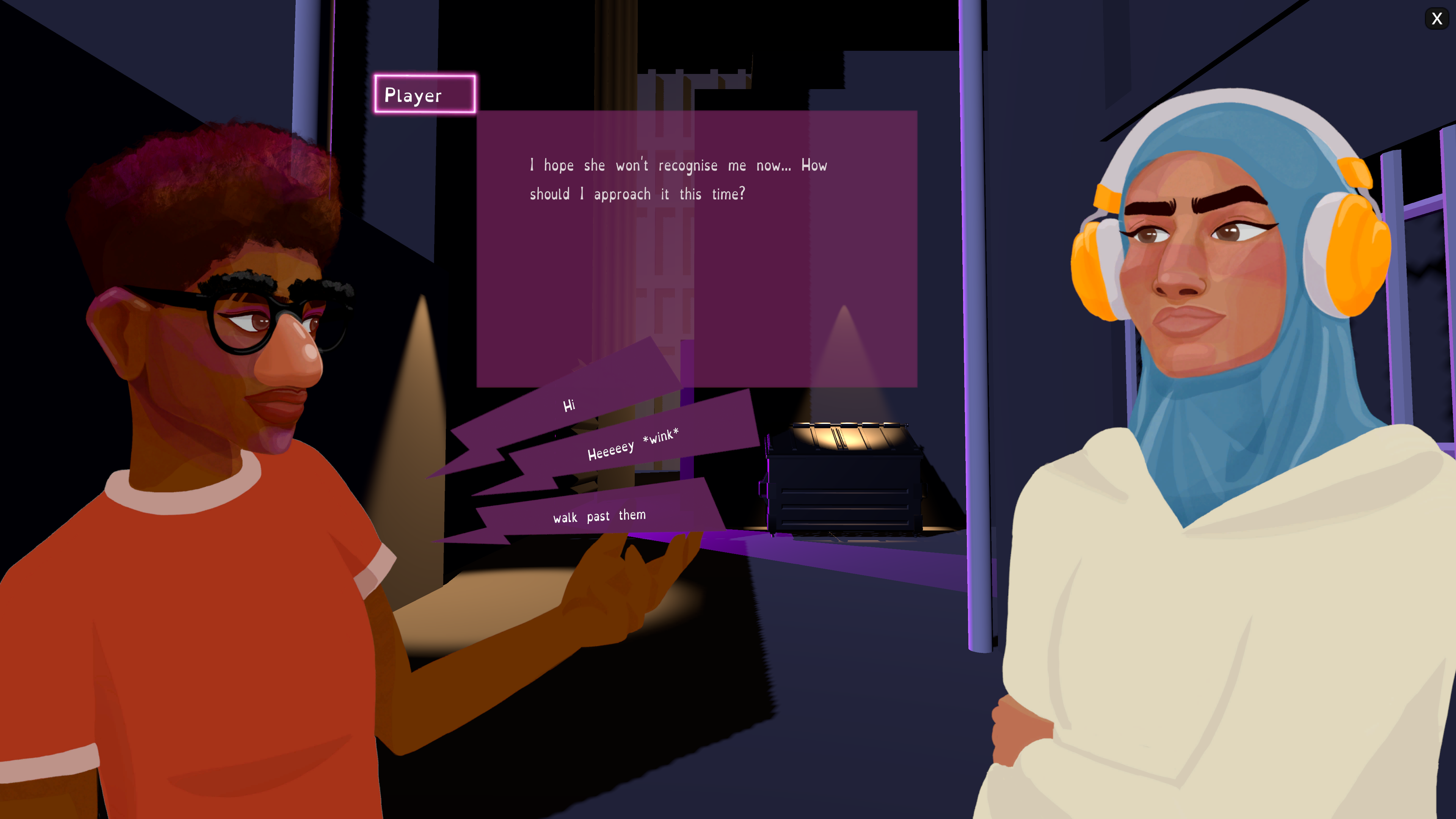
To give players multiple chances to succeed in the conversation with the bouncer, they can equip the player character with a disguise.
The disguise is intentionally exaggerated and humorous to keep retries fun and to reduce frustration after an unsuccessful first attempt.
The disguise is intentionally exaggerated and humorous to keep retries fun and to reduce frustration after an unsuccessful first attempt.
ENVIRONMENT
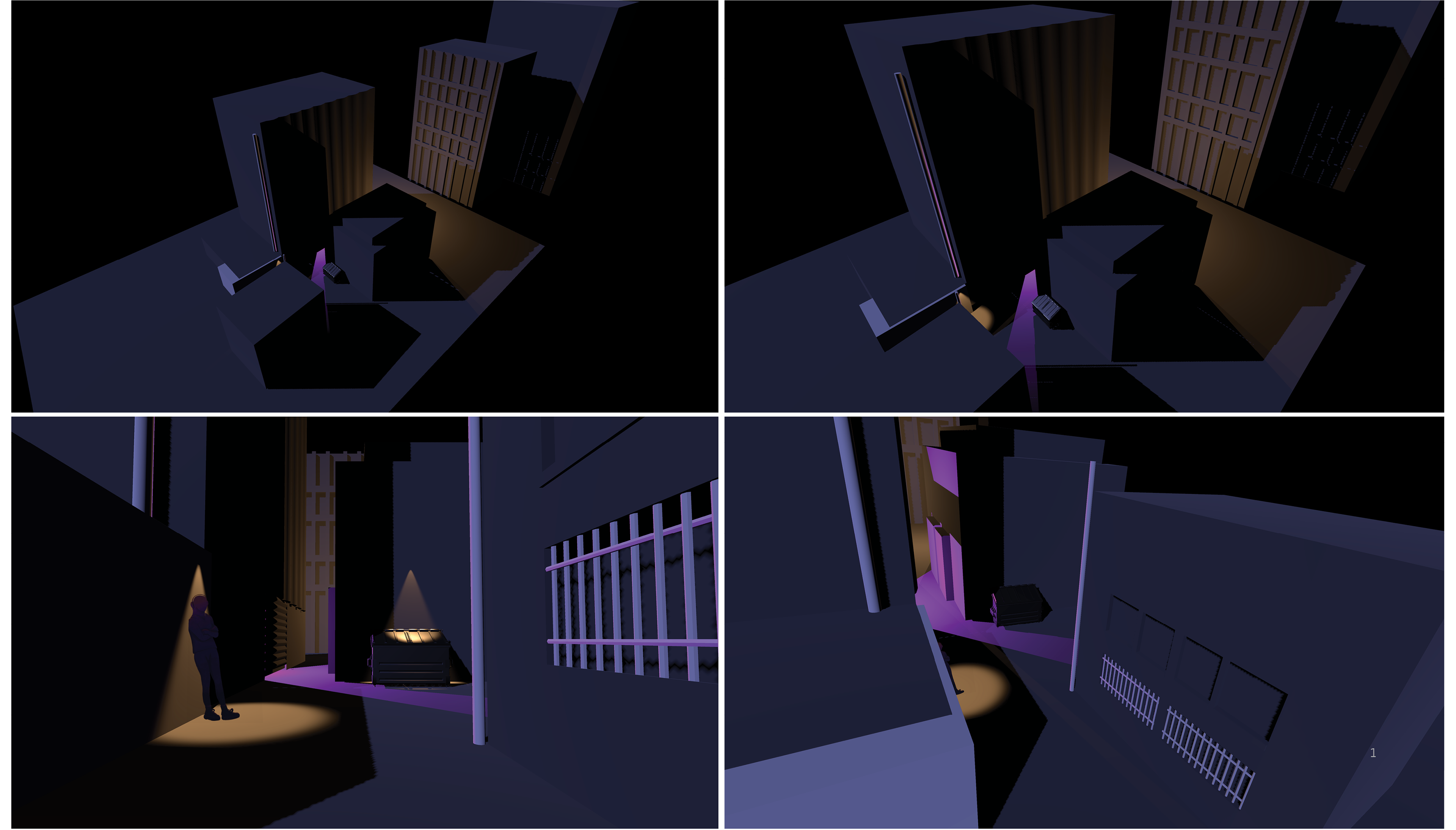
I created the environment in a 3D program to quickly test perspectives and framing without producing multiple detailed drawings. The background is intentionally simple so it supports the visual novel’s text without distracting from it. The trash bin model was sourced from CG Trader (2024).
To avoid the split-attention effect (Wild, 2009), the scene uses minimal shapes and muted colors. Audio narration could help in future versions, but was excluded here due to time constraints.
The environment depicts a simple urban backyard made of basic blocks. The palette combines cool nighttime blues with warm streetlight tones, and a pink beam from a garage door subtly indicates the player’s goal.
Currently, important elements like the trash bin for selecting a disguise, are highlighted with spotlight effects. The environment could later be converted to 2D or textured to align more closely with the character art style.
UI DESIGN
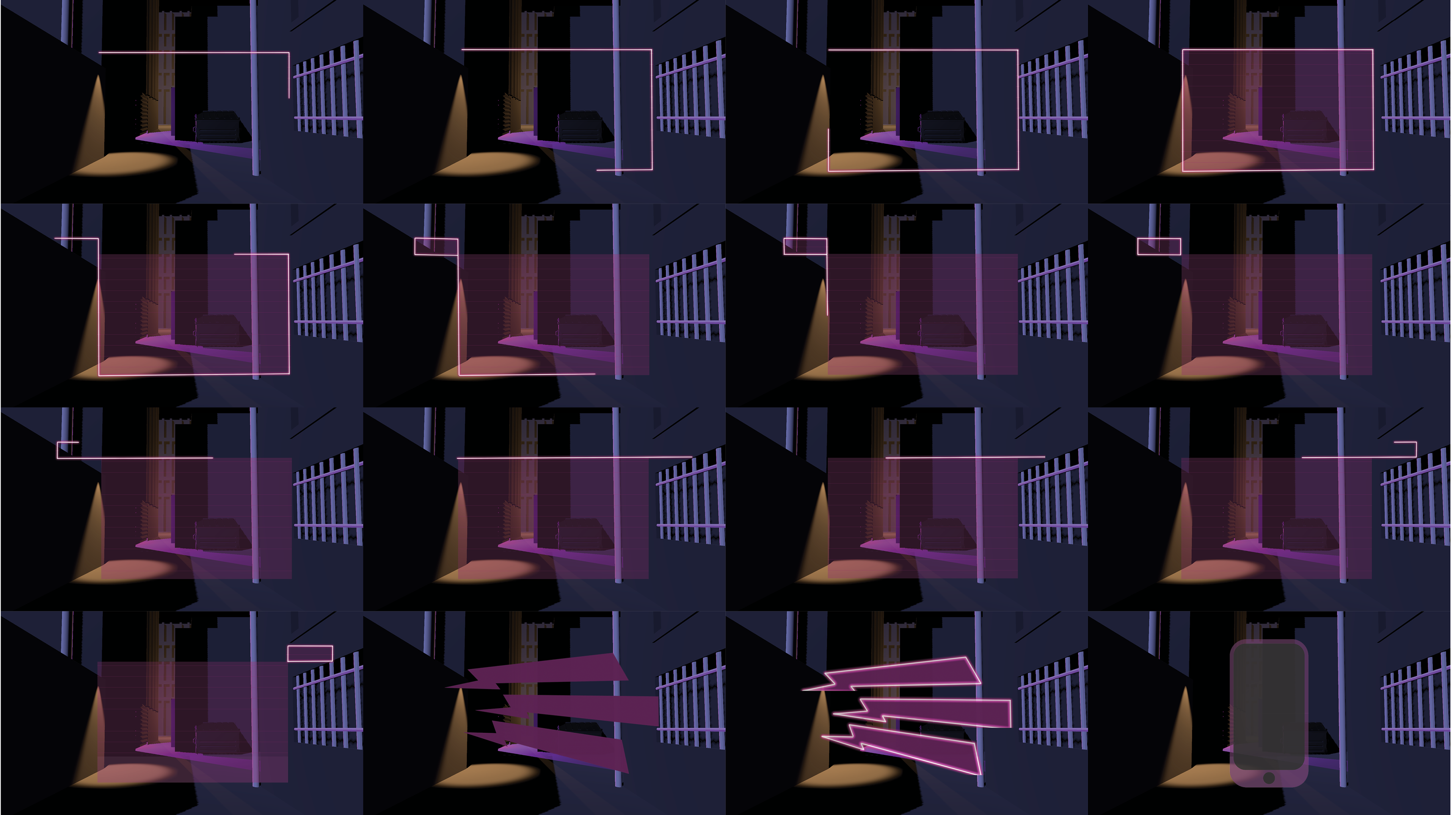
Because the game is built around diversity and inclusion, I designed the UI to be as accessible as possible. I avoided decorative elements and used clean shapes to support readability. A subtle light outline guides the player’s attention—shifting sides when the speaker changes—so players can follow the dialogue without relying on distracting colors or arrows.
Dialogue choices appear as small speech bubbles pointing toward the player character and light up when selected. I intentionally avoided effects that signal “right” or “wrong,” ensuring all options feel equally important both for scripted learning moments and for narrative choices that allow players to express their character.
For players on the autism spectrum, an optional feature could provide feedback on how choices might affect the social situation. Any non-diegetic guidance like this should remain toggleable.
To support players with dyslexia, I used the open-source OpenDyslexic font, which features heavier lower portions on letters to improve legibility and reading flow (Gonzalez, 2011).
FUTURE
INCLUSIVE FEATURES
Future iterations will add more visual cues that provide in-scene, diegetic feedback using light, similar to the flickering trash-bin highlight. Optional extra-diegetic feedback will support players with learning difficulties or challenges in reading social cues. These hints, using subtle colors, shapes, or sounds, should be toggleable and designed to avoid the split-attention effect. For neurotypical players, optional reward effects could boost motivation. Adding audio narration would further improve accessibility for visually impaired or dyslexic players.
Future iterations will add more visual cues that provide in-scene, diegetic feedback using light, similar to the flickering trash-bin highlight. Optional extra-diegetic feedback will support players with learning difficulties or challenges in reading social cues. These hints, using subtle colors, shapes, or sounds, should be toggleable and designed to avoid the split-attention effect. For neurotypical players, optional reward effects could boost motivation. Adding audio narration would further improve accessibility for visually impaired or dyslexic players.
ANIMATIONS
Characters should receive simple animations, basic emotional transitions and light idle motions like blinking or breathing, to enhance clarity without distracting from reading.
Characters should receive simple animations, basic emotional transitions and light idle motions like blinking or breathing, to enhance clarity without distracting from reading.
CHARACTER & LEVEL DESIGN
The current characters are a first iteration. Future versions will refine clothing, offer optional accessories, and possibly use a more abstract style suitable for mobile devices. The level will be adapted to match this style by converting the 3D scene into 2D assets and adding diegetic elements like posters or signs. The environment should remain more abstract than the characters to maintain visual focus.
The current characters are a first iteration. Future versions will refine clothing, offer optional accessories, and possibly use a more abstract style suitable for mobile devices. The level will be adapted to match this style by converting the 3D scene into 2D assets and adding diegetic elements like posters or signs. The environment should remain more abstract than the characters to maintain visual focus.
SCENE & STORY EXPANSION
The scene will be expanded with multiple dialogue paths that encourage players to apply what they’ve learned. Correct choices should be logically inferable through environmental clues or NPC dialogue, supporting a sense of agency and reducing frustration. The full narrative spans 13 chapters with puzzles, branching dialogues, relationships, hints, and multiple endings to ensure replayability. Additional linked visual novels could complement different levels of English school books while remaining playable on their own.
The scene will be expanded with multiple dialogue paths that encourage players to apply what they’ve learned. Correct choices should be logically inferable through environmental clues or NPC dialogue, supporting a sense of agency and reducing frustration. The full narrative spans 13 chapters with puzzles, branching dialogues, relationships, hints, and multiple endings to ensure replayability. Additional linked visual novels could complement different levels of English school books while remaining playable on their own.
MOBILE ADAPTATION
Since the project is designed for mobile, the next step is adapting mouse input to touch controls and enhancing visual feedback. Mobile phones are the priority platform, ensuring easy access for students who already use them regularly.
Since the project is designed for mobile, the next step is adapting mouse input to touch controls and enhancing visual feedback. Mobile phones are the priority platform, ensuring easy access for students who already use them regularly.